
Responsible Design
and Development of Exoskeletons
In this project we explore technical and social challenges of exoskeletons with a focus on the people involved in the system.
” Responsibility and accountability for wearable robot actions do not just arise regarding individual users, but also on a societal level. ”
Alexandra Kapeller and colleagues
Background
Exoskeleton technology, i.e., wearable robotics, has made notable advances during the last decade, resulting in a substantial variety of applications. They are designed and built to amplify human strength and agility. In its healthcare applications, their main goal is to replace diminished or lost limb functionality, helping people regain some ambulatory freedom.
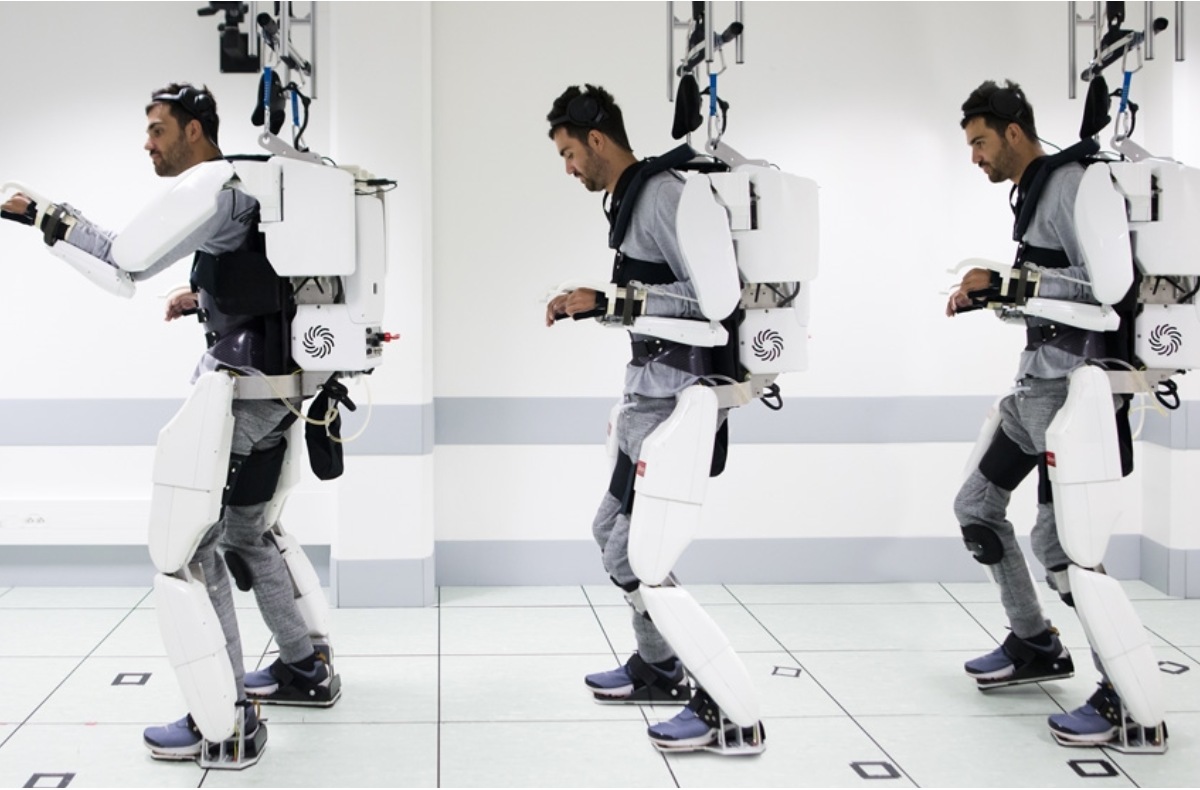
Rewalk is one of the most well-known assistive exoskeletons in the world that offers the potential to restore ambulation to individuals with paraplegia. This motorized exoskeleton which has approval from the Food and Drug Administration (FDA), enables individuals with lower limb disabilities, to stand, walk, and climb stairs independently. The promise of the device is to improve the quality of life and general health of disabled people, restore their dignity, enable them to work, and reduce their medical and other related expenses.
ReWalk consists of four motorized joints, a wearable brace support suit, a combination of sensors, a computer-based control system, and rechargeable batteries. The robot is worn around the legs, chest and back on top of everyday clothing.
Our story
Challenge
Despite all the potential benefits of Rewalk, we can see very limited use of these robots in today’s world. Rewalk and other exoskeletons seem to have failed to find a place in the daily lives of individuals with paraplegia. High cost, lack of comfort, and difficulty of use can be cited as some of the reasons that have led the exoskeleton technologies to this state. On a higher level, lack of adherence to human-centred design principles in such systems may be one of the most important causes of this failure.
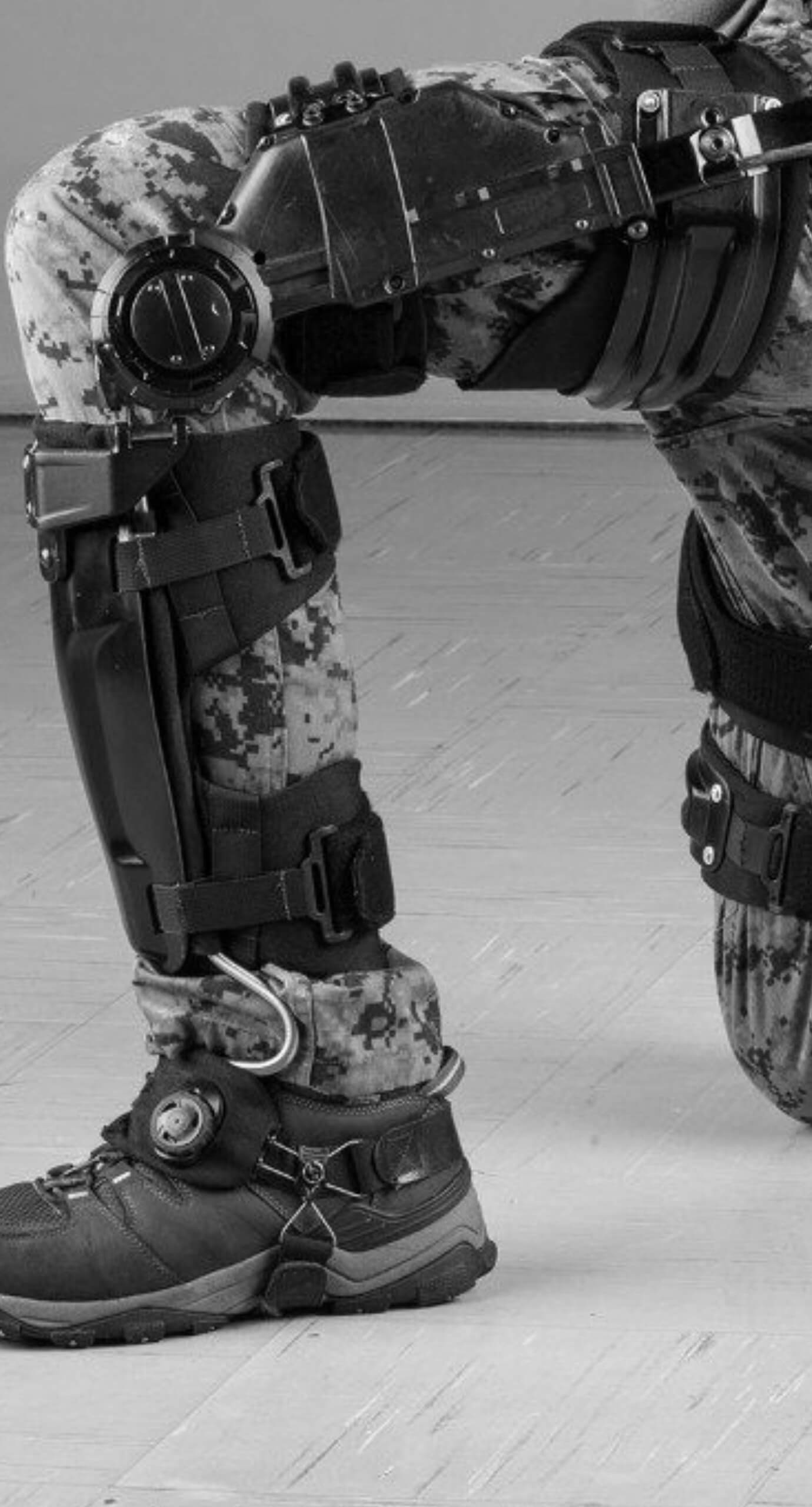
For all their promise, exoskeletons and other wearable robotics raise a number of ethical and social concerns. They include general social concerns relate to the psychological impact on disabled individuals and their families, as well as how society might reconsider ‘able-ness’, and other social issues such as social justice concerns relating to access or insurer’s refusal to invest in this technology. The political aspects of development are often overlooked. Some exoskeleton manufacturers have contracts with defence to develop exoskeleton suitable for military or industrial purposes. The solution which can eventually change the life of soldiers and workers forever.
In this project we look into the design of Rewalk and the ecosystem of this innovation to understand the underlying assumption about the human’s autonomy and agency within it. We aim to find ways we can ensure the technologists are innovating responsibly build and develop the exoskeletons.
Related Members and Collaborators

Amir Asadi